Woman Hunter Shooting Birds Vector Review
A Calm Scene with Strong Visual Impact
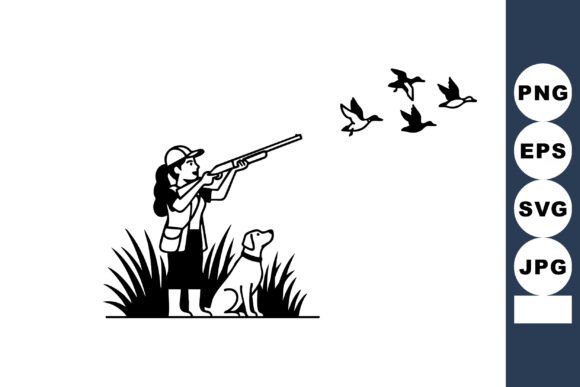
At first glance, Woman Hunter Shooting Birds Vector gives off a calm yet powerful mood. The black and white illustration captures a moment of focus—of a woman hunter aiming at flying birds, with her dog nearby in the grass. It’s not just a design; it’s a story waiting to be stitched into fabric.
The composition is balanced, with clear lines and minimal distractions. The figure of the hunter is central, drawing attention naturally, while the dog adds a touch of companionship. This kind of visual storytelling makes it a great candidate for custom apparel, tote bags, or even nursery decor where a quiet, nature-inspired theme fits well.
How It Stands Up in Real Embroidery Projects
If I were to use this design on a custom embroidered tote bag, I’d expect it to stand out without being overwhelming. The black and white palette offers flexibility—whether you want to keep it monochrome or add color through thread choices. It could work beautifully as an embroidered patch on a jacket or as a subtle sweatshirt embroidery detail.
For handmade products, especially those targeting outdoor enthusiasts or nature lovers, this design has a strong appeal. Imagine a personalized gift like a pillow cover or kitchen towel featuring this scene—it would feel both elegant and meaningful. Even for small shop product lines, such as aprons or caps, the design maintains its presence without losing clarity.
As an applique design, it would stitch cleanly, with areas that can be filled using satin stitch or fill stitch for texture. The simplicity of the black and white style also means it won’t get lost on darker fabrics, provided the right thread colors are chosen.
Where to Use with Caution
While Woman Hunter Shooting Birds Vector is versatile, there are scenarios where extra care is needed. On small hoop sizes, details like the dog’s ears or the rifle’s trigger might lose definition. Testing on scrap fabric before committing to a finished product is always wise.
Textured fabrics or thin materials may require additional stabilizer to maintain shape and prevent distortion. If planning to use it on stretchy fabric like knits, consider adjusting the stitch density to avoid puckering.
Also, when placing it on curved surfaces like caps or layered garments, ensure the design doesn’t overlap awkwardly. For tiny lettering or intricate corners, the file should be reviewed closely to confirm all elements will translate well under the needle.
Design Notes for Embroidery Professionals
Before finalizing any project with Woman Hunter Shooting Birds Vector, take time to test it on different hoop sizes and fabrics. Check how the stitch density affects the look—too dense and it might feel stiff; too sparse and the image loses impact.
Consider thread color contrast if you plan to deviate from the original black and white. A soft gray or muted tone could give it a more modern feel, while bold black on light fabric keeps it classic.
For craft business owners or Etsy sellers, make sure the digital embroidery file includes all necessary formats like SVG and EPS. Always verify the license terms before selling any finished items or digital versions to avoid legal issues.
Using a printable mockup can help visualize how the design will look on various products. It’s also worth checking how it performs on both light and dark fabric backgrounds—a subtle change in background can dramatically alter the overall effect.
Final Thoughts on Value and Appeal
Woman Hunter Shooting Birds Vector has a strong sense of purpose and visual balance that makes it suitable for a wide range of embroidery projects. Whether used for commercial embroidery, personalized gifts, or small shop merchandise, it brings a unique story to the surface.
Its handmade presentation feels authentic, and the design’s clean lines support brand consistency for craft businesses looking to offer high-quality, recognizable design assets.
With thoughtful application, this vector can elevate everything from holiday embroidery to nursery decor, making it a valuable addition to any designer’s toolkit. Just remember to approach it with practicality—test, adjust, and ensure every stitch tells the intended story.